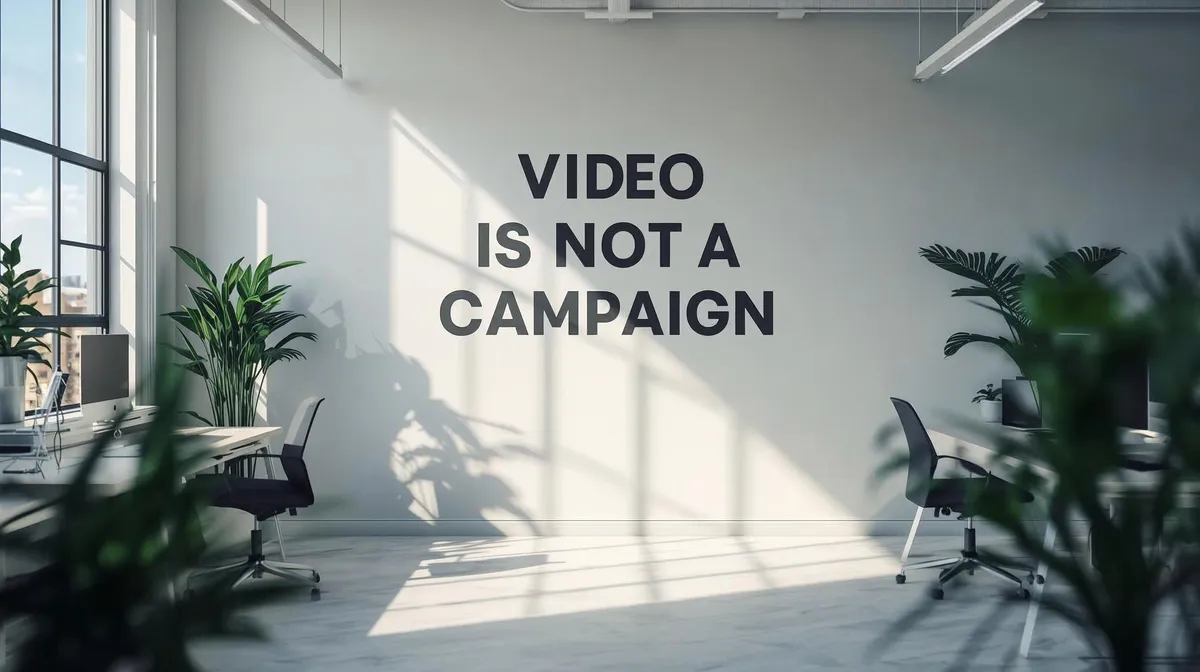
Video as Infrastructure: A Different Way to Think About Content
Most companies think about video like a campaign.
There's a launch. A push. A burst of activity. Everyone gets excited for a few weeks. Then it's over, and the team moves on to the next initiative.
This is why video ROI feels so hard to pin down. You pour resources into a project, it lives for a few weeks, and then everyone forgets about it. The video sits on a YouTube channel or a landing page, slowly accumulating dust while the view count stalls at a few hundred.
There's a different way to think about it.
Infrastructure vs. Campaigns
A campaign has a start date and an end date. Infrastructure compounds over time.
Think about the difference between renting office space for a single event versus owning a building. The event ends and you walk away with nothing. The building keeps providing value year after year.
Video can work the same way. Video as infrastructure means treating video content as a long-term asset library rather than a series of one-off campaigns. Instead of producing videos for specific launches that expire, you build a collection of evergreen content that keeps working across your website, sales process, and social channels for months or years.
When you build video as infrastructure, every piece you create becomes part of a growing system:
A library of thought leadership content that positions you as the expert in your space
A collection of sales assets that answer objections faster than any email ever could
A bank of clips that feed your social presence for months without starting from scratch
A repository of customer stories that build trust at every stage of the buyer's journey
This library doesn't expire after a campaign ends. It keeps working on your website, in sales sequences, and across social channels long after you've moved on to other priorities.
The Shift in Thinking
Instead of asking "what video should we make for this campaign?" ask "what video would add the most value to our buyer's journey?"
Think about gaps:
What questions do we answer over and over that don't have a video yet?
What objections slow down our sales process that could be addressed on camera?
What topics do we have opinions on that we haven't captured?
What would help a buyer trust us faster before they ever talk to sales?
Over time, you fill in the gaps. The library grows. Each new piece makes the whole system more valuable because it connects to everything else you've already built.
Why This Matters for ROI
The ROI problem with video isn't that video doesn't work. It's that most companies measure it wrong.
They look for immediate conversion. Direct attribution. Click-to-close metrics. They want to see a straight line from video view to signed contract.
But video, especially thought leadership video, works through familiarity. Through repeated exposure. Through trust built over time. It's not a direct response mechanism. It's a relationship builder.
When a prospect finally reaches out, they've often watched five to ten pieces of your content over several months. They arrive pre-sold, not because of any single video, but because the library did its job across dozens of touchpoints.
You can't attribute that to one asset. But you can feel it in shorter sales cycles, warmer inbound leads, and buyers who say, "I've been following you for a while."
That's infrastructure working.
Related:
