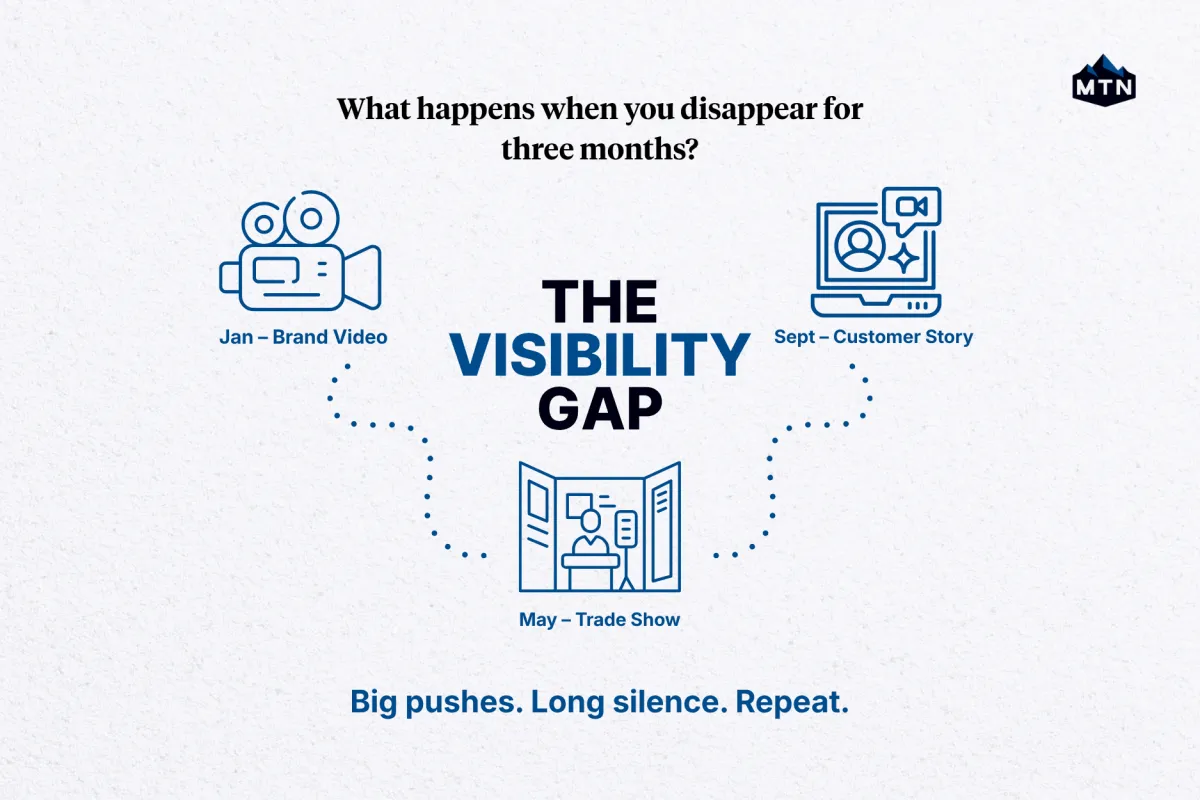
The Visibility Gap Is Costing You Pipeline
“The visibility gap isn't a production problem. It's a planning problem.” - Alex LaCasse
Most B2B companies approach video the same way.
A big production in Q1. Maybe a trade show video in spring. A customer story before the end of the year. Then silence until the next budget cycle comes around.
They call this a video strategy. It's not. It's a video wish list with a calendar attached.
The problem isn't the videos themselves. The problem is the gaps between them. That silence between posts is what we call the visibility gap. It's the months-long stretch where your audience forgets you exist while your competitors keep showing up.
Your buyers aren't sitting around waiting for your next release. They're scrolling LinkedIn. They're researching solutions. They're forming opinions about who to trust. And they're doing all of this every single day, whether you're posting or not.
When you disappear for three months between videos, you're not just losing visibility. You're losing familiarity. And familiarity is the foundation of trust.
The Math Nobody Talks About
Think about how many touchpoints it takes before a buyer even remembers your name.
Research shows it takes somewhere between 7 and 13 touches before a B2B buyer moves from "I've heard of them" to "I trust them enough to reach out." At four videos per year, you're nowhere close to that threshold. You could be posting for three years before a single prospect hits enough touchpoints to feel comfortable picking up the phone.
Meanwhile, your competitors who post weekly are building familiarity while you're starting from scratch every quarter. They're not necessarily making better content. They're just making more of it, more often.
B2B companies that post video weekly build trust faster than those posting quarterly. A sustainable rhythm looks like three touchpoints per week: a text post, a video, and a carousel or observation. That cadence keeps you visible without burning out your team.
The Fix Isn't More Production Days
The instinct is to think you need more shoots. More budget. More crew days. More time blocked on calendars.
You don't.
You need a system that extracts more value from the shoots you're already doing.
One filming session, planned correctly, can produce:
10 full videos
20 to 30 short clips
10 written posts
5 to 10 carousels
That's 35 to 50 pieces of content from one production engagement.
The visibility gap isn't a production problem. It's a planning problem. Most companies put all their energy into the shoot itself and almost none into what happens after. They optimize for one deliverable when they should be optimizing for a library.
What Changes When You Close the Gap
When you show up consistently, something shifts in how your audience perceives you.
Prospects start recognizing your name before the first sales call. Inbound leads arrive warmer because they've already seen your face a dozen times. Sales cycles shorten because buyers trust you before they ever talk to you.
This doesn't happen from one viral video. It doesn't happen from a single big campaign. It happens from a steady, repeated presence over time.
The companies winning with video aren't louder than everyone else. They're more consistent.
Close the gap. Stay visible. Let the compound interest of familiarity do the work for you.
Related:
